
Amid record-high fuel prices, Finance Minister Nirmala Sitharaman on Monday said there is no proposal as of now to bring crude oil, petrol, diesel, jet fuel (ATF) and natural gas under the Goods and Services Tax (GST). When the GST was introduced on July 1, 2017, amalgamating over a dozen central and state levies, five commodities - crude oil, natural gas, petrol, diesel, and aviation turbine fuel (ATF) - were kept out of its purview given the revenue dependence of the central and state governments on this sector. This meant that the central government continued to levy excise duty on them while state governments charged VAT. These taxes, with excise duty, in particular, have been raised periodically.

Omkeshwar Singh, head, Rank MF, a mutual fund investment platform, answers your queries.

Abramovich handed Chelsea director control of firm on day of Ukraine invasion - filings

The National Stock Exchange (NSE) has got into firefighting mode to control the reputational damage caused by the Securities and Exchange Board of India's (Sebi's) order against its former managing director and chief executive officer Chitra Ramkrishna and others. According to sources, the exchange's management over the past one week has met several key stakeholders, including officials in the finance ministry and Sebi, major shareholders, and trading members, trying to distance itself from the controversy. The exchange plans to hold more meetings in the coming week to ensure that trading volumes and confidence in the bourse don't get impacted, they added.

A business in India wanting access to maps and geospatial data would typically have to wait months before it got what it wanted. All this is set to change with the new guidelines on geospatial data, report Neha Alawadhi and Peerzada Abrar.

Leveraging global capital markets to give muscle to an innate competitive advantage in rapid mass transaction systems will lead to India becoming a petri dish for global enterprises and new-age innovation that it yearns to be.

The government has created a comprehensive budget with sharp focus on sustaining economic activity and investment but more clarity is needed on areas like taxation framework for adopting remote working on a long-term basis, IT body Nasscom said on Monday. The industry association noted that the IT/ITeS (Information Technology-enabled Services) industry has been a key driver of growth and jobs in 2020 and there is an opportunity to significantly accelerate it further. "For the IT sector, one of the biggest needs ahead of us is the development of future business models, with hybrid working becoming a reality. "We look forward for the government to provide clarity on providing a framework in direct taxes and indirect taxes for the industry to adopt WFH/remote working on a long-term basis," Nasscom said in a statement.
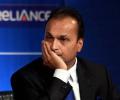
He said unwarranted rumour-mongering, speculation, and bear hammering of all Reliance Group companies shares over the last few weeks had caused grave damage to all our stakeholders.

For the wealthy, post-tax returns of debt funds would work out better

To help the country emerge as a true welfare State, political parties must put the country's interests first before strategising to win elections and short-term goals, argues Ramesh Menon.

'It is going to be extremely rapid and anybody who is not there, be it investor, manufacturer, supplier, will miss out.'
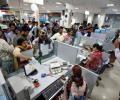
Lenders send 'SOS' to the finance ministry on the tardy decision making and pile-up of cases at the Debt Recovery Tribunals and its appellate forum the Debt Recovery Appellate Tribunal.

'Put the assets of PMC Bank and the personal assets of the HDIL promoters and head of PMC Bank in an escrow account and ring-fence it from the ad hoc action of the revenue departments and creditors,' recommends Debashis Basu.

Srei Infrastructure's vice-chairman -- and former Assocham president -- Sunil Kanoria discusses the Kanoria businesses and his impression of the Modi government with Ishita Ayan Dutt and Namrata Acharya.

Buoyed by the government's big push for infrastructure, companies expect growth to resume by the end of the year.
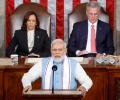
Here's the full text of Prime Minister Narendra Modi's address to a joint session of the United States Congress, delivered on Thursday.
Insurance companies will have more infrastructure firms in their equity investment portfolio soon.

Reliance Industries Ltd on Thursday announced a Rs 75,000 crore investment in new energy business over the next three years as the operator of the world's largest oil refinery pivots towards a greener and cleaner version. Reliance will build solar manufacturing units, a battery factory for energy storage, a fuel cell-making plant and an electrolyzer unit to produce green hydrogen as a part of the business, chairman Mukesh Ambani said at the company's annual general meeting with shareholders on Thursday. It will also set up 100 gigawatts (GW) of solar power generation capacity by 2030 and invest in setting up a carbon fibre plant.

The lockdown that crippled the entire logistics, delivery and supply chain network to near zero, was enough to deal a body blow to India's fastest growing unicorn whose very business model saw a severe disruption, like several other firms and sectors.

5G networks in India can be deployed in three months but in limited areas as the optical fibre based infrastructure to support the technology is not ready yet, telecom industry players said on Tuesday. Nokia India head of marketing and corporate affairs Amit Marwah said that India has to take a call on deployment of 5G services otherwise it will miss to take advantage of the next generation technology that it can bring for the economy.

Sitharaman, a newcomer on the Forbes most powerful women list, is ranked 34th. The Forbes 2019 list of 'The World's 100 Most Powerful Women' has been topped by German Chancellor Angela Merkel, followed by President of the European Central Bank Christine Lagarde in the second spot and Speaker of the US House of Representatives Nancy Pelosi, ranked third. Also on the list is Bangladesh Prime Minister Sheikh Hasina (29).

M-Cap of top 10 business groups went up by 46% this year.

RSS-aligned Bharatiya Mazdoor Sangh (BMS) on Monday expressed disappointment over the government's budget proposals with regard to divestment and foreign direct investment, especially in the insurance sector. The BMS, however, lauded the government for its current efforts on the massive vaccination programme, a special scheme for tea workers in West Bengal and Assam, labour oriented push on infrastructure projects in construction sector and development of five major fishing harbours viz. Kochi, Chennai, Visakhapatnam, Paradip, and Petuaghat as hubs for economic activities etc. On other Budget proposals, it said in a statement that "mixing the beautiful concept of Aatmanirbhar Bharat with FDI and disinvestment in the Union Budget is disappointing for the employees".

Indian companies' market capitalization has grown at the fastest pace last year among major economies despite contraction in GDP, economists from SBI said, flagging the risks to financial stability it poses. Further, retail investors have shown higher interest in markets and their numbers have increased by 1.42 crore in FY21 and another 44 lakh in April and May, they said in a note, wondering if this will be a lasting behavioural change or is transitory. The economists at the country's largest lender attributed the growth in equity markets to lower returns on other financial instruments amid a low rates regime, increase in global liquidity, and even a tendency to spend more time at home because of mobility restrictions which led many to trade more.

Government may also consider giving relief to some of the worst-affected sectors.

It will take over large non-performing assets of banks and help in revive companies ridden with bad debts.
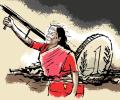
If Nirmala Sitharaman does indeed present a 'never-before' like Budget on February 1, going by her promise, she would create a new benchmark for post-contraction Budgets, observes A K Bhattacharya.

In the first phase, most of the outdated regulations in the state and central Acts will be removed. Further, compliances with regard to annual inspections, licence renewal, and storage of multiple data will be eased.

Housing Development Finance Corp (HDFC) chairman Deepak Parekh on Tuesday said that while the country's macroeconomic fundamentals remain strong and the recovery is in progress, the unpredictability of coronavirus will remain a key challenge. Owing to the second wave, the Indian economy is likely to mirror a similar trend seen in FY21, where the first half of the financial year is weaker and the second half is significantly stronger, he said. "I remain confident that India's macroeconomic fundamentals are strong. Recovery is underway," Parekh said while addressing the 44th annual general meeting of HDFC Ltd. He said, the country's forex reserves and foreign direct investment inflows have scaled record highs, the capital markets are also buoyant and agriculture growth is expected to remain strong with food grain production estimated at over 305 million tonnes.

'Why do we make finance ministers go into contortions, to tell us that near 6% is 3.5%?' 'Why not encourage more open and full accounting so that the country knows the real picture,' asks T N Ninan.

The short answer, as usual, is I don't know. But this is what could happen in the next one year...

'I'll give it to the vaccine manufacturers without guarantees, take the payment in advance and give me the supplies.' 'The moment you give me one lot of supply, I'll give you more.'

Of the total cash outgo Rs 40,000 crore is towards enhanced expenditure under Mahatma Gandhi National Rural Employment Guarantee Program and Rs 33,771.48 crore have been sought for direct benefit transfer under Pradhan Mantri Jan Dhan Yojana and National Social Assistance Programme.


Not just from the likes of Alibaba and Didi Chuxing, Indian startups saw a surge in Chinese funding from financial investors in 2019. This is a seven-fold jump from $459 million in 2016.

The central government has agreed in-principle to Air India employees' main demands. It fears an industrial dissension now could impede the process of privatisation. It has agreed to bear the cost of liquidation loss on account of transfer to the Employees' Provident Fund Organisation (EPFO) from company-owned trusts, inclusion of employees in the central government health scheme (CGHS), and encashment of leaves. The template of the Air India process will be followed for other public sector undertakings up for privatisation at a later date.

Billionaire Gautam Adani's Adani group on Monday said it has reached an agreement to acquire GVK group's shareholding and control of Mumbai airport.

Finance Minister Arun Jaitley on Monday said state governments should emulate the concept of 'Gujarat International Finance Tec-City'
Adani group is in talks to acquire a 50.5 per cent stake held by GVK Group in Mumbai International Airport (MIAL) and another 23.5 per cent of minority partners, Airports Company South Africa (ACSA), and Bidvest Group, two sources with knowledge of the matter said.

'This plan is basically to allow some of the government assets for rent, and surely not for sale.' 'There is a difference between selling a house and renting out a house.'
